


Description
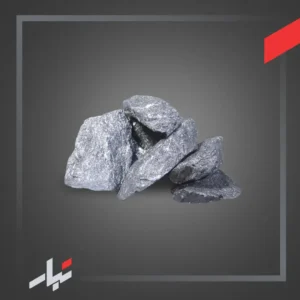
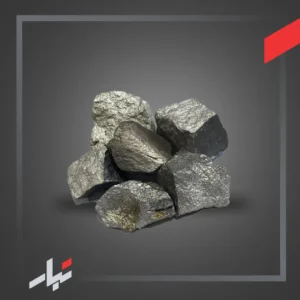
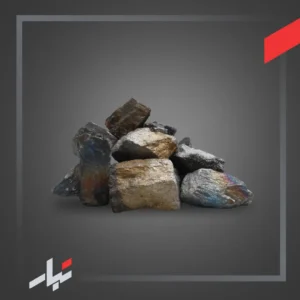
Low Carbon Ferromanganese contains 75–85% manganese and a maximum of 0.5% carbon. Its most common application is in the steel and cast iron casting industries. Low carbon ferromanganese has a silvery gray color and is generally in the form of lumps with a grain size of 10-60 mm or powdered. This ferroalloy is used in the production of parts where the carbon percentage is not high.
This ferroalloy leads to the elimination of waste materials, including sulfur and oxygen, in the steelmaking industry because if the amount of sulfur in the melt increases, it leads to brittleness and cracking of the final part. As a result of adding ferromanganese to the melt, the manganese in it reacts rapidly with sulfur and manganese sulfide (MnS) is formed, which is placed in the molten slag and is eventually separated from the melt.
Due to the application of ferromanganese, its carbon content must be determined; this is important because after adding ferromanganese to the melt, its carbon content cannot be increased or decreased.
The most important and common properties and applications of low-carbon ferromanganese:
- In the steel and cast iron casting industries as a deoxidizing and desulfurizing agent –
- Increases hardness, tensile strength, toughness, workability, toughness
- In carbon steels or stainless steels to improve ductility in the hot state (through expansion and stabilization of the austenite phase)
- Increases weldability
- Increases wear resistance
- Increases corrosion resistance
Chemical analysis of low-carbon ferromanganese:
|
Mn |
C |
Si |
P |
S |
|
78-81% |
max 0.5% |
max 0.7% |
max 0.2% |
max 0.02% |



Reviews
There are no reviews yet.