


Description
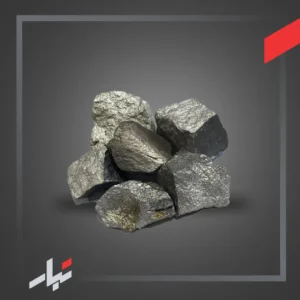
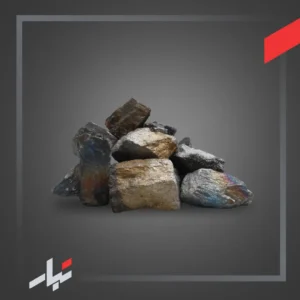
A ferroalloy consisting of iron and vanadium, the most common of which contains 78-83% vanadium. Ferrovanadium is in the form of lumps with a grain size of 10-70 mm and is silver in color. The history of using ferrovanadium for the first time is related to the Ford Company for the production of the Model T car. This ferroalloy is one of the most widely used ferroalloys for the production of parts that must have high hardness and strength. The vanadium present in ferrovanadium is carbidizing, which, by forming carbide particles at the grain boundary, leads to a reduction in the movement of grain boundaries during the heat treatment process. On the other hand, the carbide particles formed at the grain boundary cause a finer grain structure than its coarse-grained steel, which has higher impact resistance.
Advantages of ferrovanadium:
- Increased wear resistance
- Increased hardness, strength and ductility
- Increased corrosion resistance
- High thermal resistance
Ferrovanadium Applications:
- Production of automotive parts such as bearings, gears, axles and crankshafts
- Production of high-speed cutting tool steels
- Production of sensitive steel parts used in the aerospace industry, turbine blades and jet engines, where high temperature resistance is required.
Chemical Analysis of Ferrovanadium:
|
Fe |
V |
Al |
C |
P |
S |
Size |
|
Balance |
77-83% |
max 0.4% |
Max 0.9% |
max 0.05% |
Max 0.08% |
10-70 mm |




Reviews
There are no reviews yet.